From an RGB video to a parametric kitchen
A real kitchen — red walls, marble counter, oak cabinets — captured on a phone, turned into a watertight parametric CAD model, and loaded into FOI Sim as a training environment for manipulation skills.
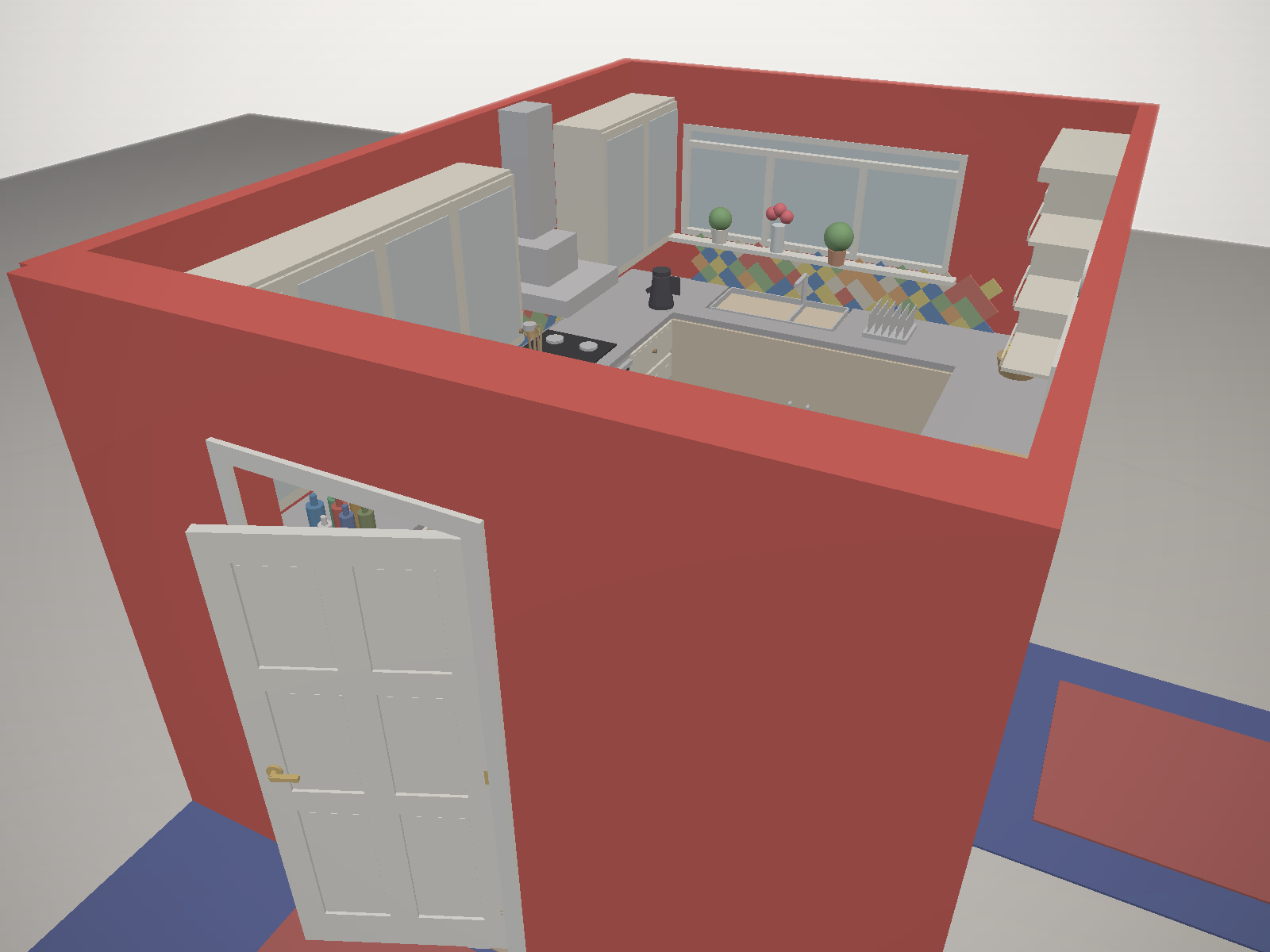
Interior view of the reconstructed kitchen — every surface is a parametric solid, not a mesh bake.
What you're looking at
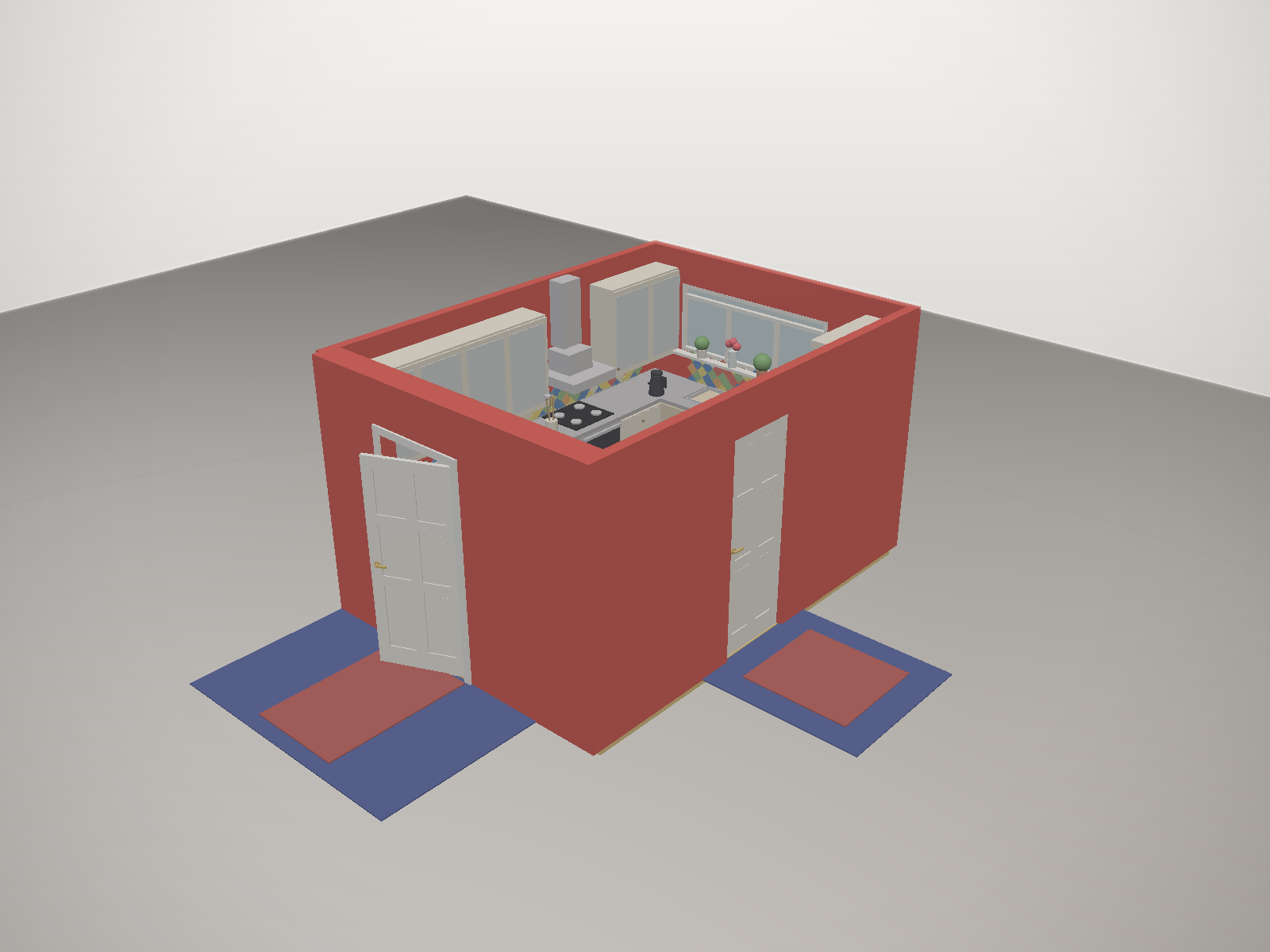
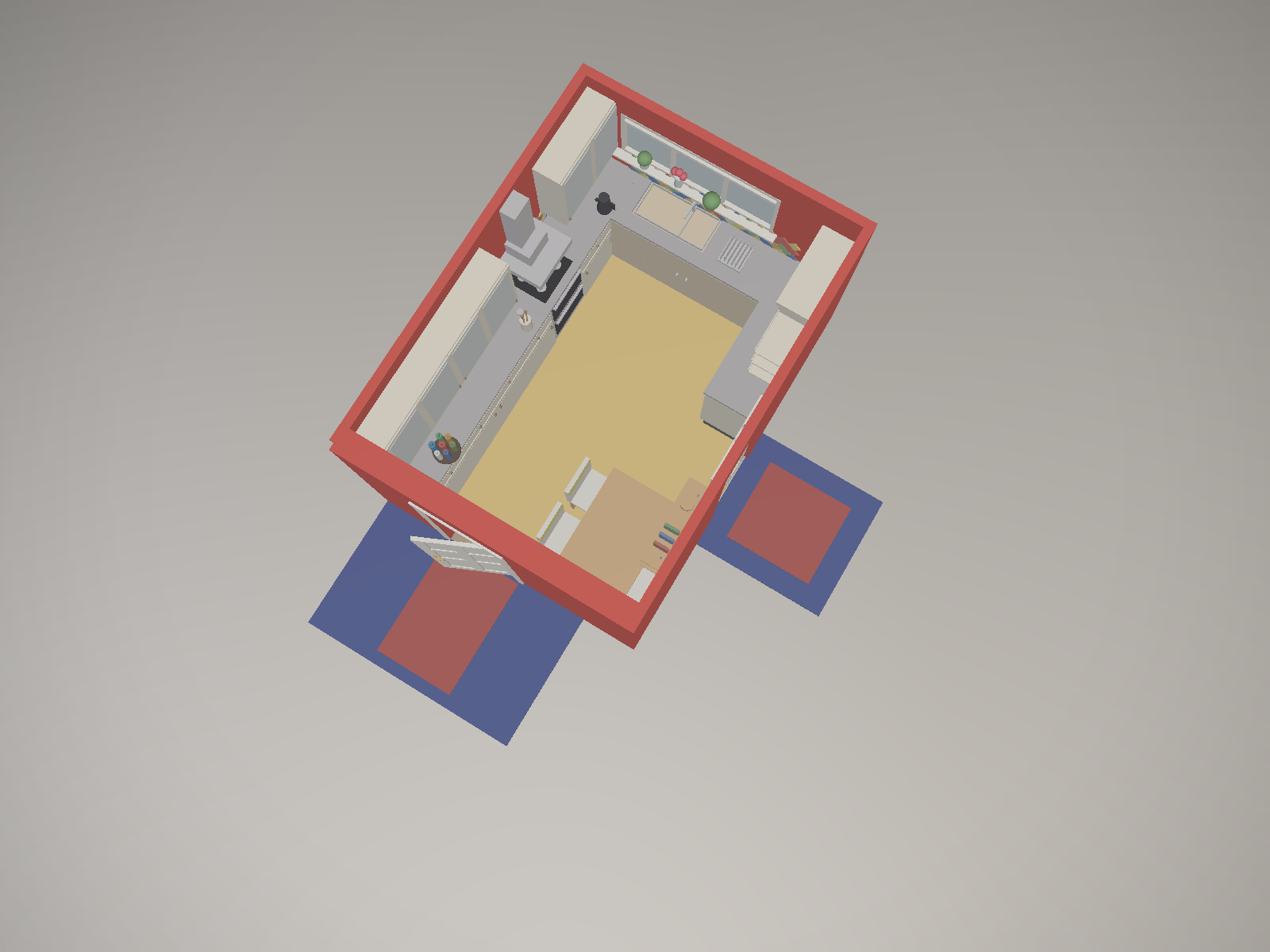
A parametric CAD model of a real kitchen, built from a single RGB video walkthrough. Every element — cabinets, countertop, sink, shelving, door — is a separate watertight solid with clean face normals and proper UV mapping.
The model is not a photogrammetric mesh or a neural bake. It is parametric: dimensions can be edited, objects can be removed or repositioned, and collision geometry comes for free because every surface is already a closed solid.
This is the kind of environment a manipulation policy needs: a kitchen where a robot can open a cabinet, place a dish, or wipe a counter — with every contact surface physically meaningful.
Why it matters for Forenly
The Scene→Sim pipeline has two lanes. Study 01 showed the neural reconstruction lane — Gaussian splats for visual fidelity. This study shows the other lane: parametric reconstruction for physical fidelity.
A splat looks right but has no collision geometry. A parametric model looks simpler but every surface is physics-ready. The skill layer needs both: splats for perception training and parametric twins for contact-rich manipulation. This kitchen is the contact-rich half.
The honest part
The parametric model captures layout and proportions faithfully but not fine detail. Tile grout lines, cabinet handles, faucet geometry — all simplified. The trade-off is deliberate: simplified geometry simulates faster and collides cleanly, at the cost of visual realism.
Material assignment is manual. The red wall colour, marble texture, and oak grain are applied by hand after reconstruction — the pipeline does not yet auto-assign materials from the source video. That is the next step.
The Skill Layer for humanoid robots
Forenly AI turns real scenes into simulation where humanoids learn their skills — then transfers them onto the machine.